

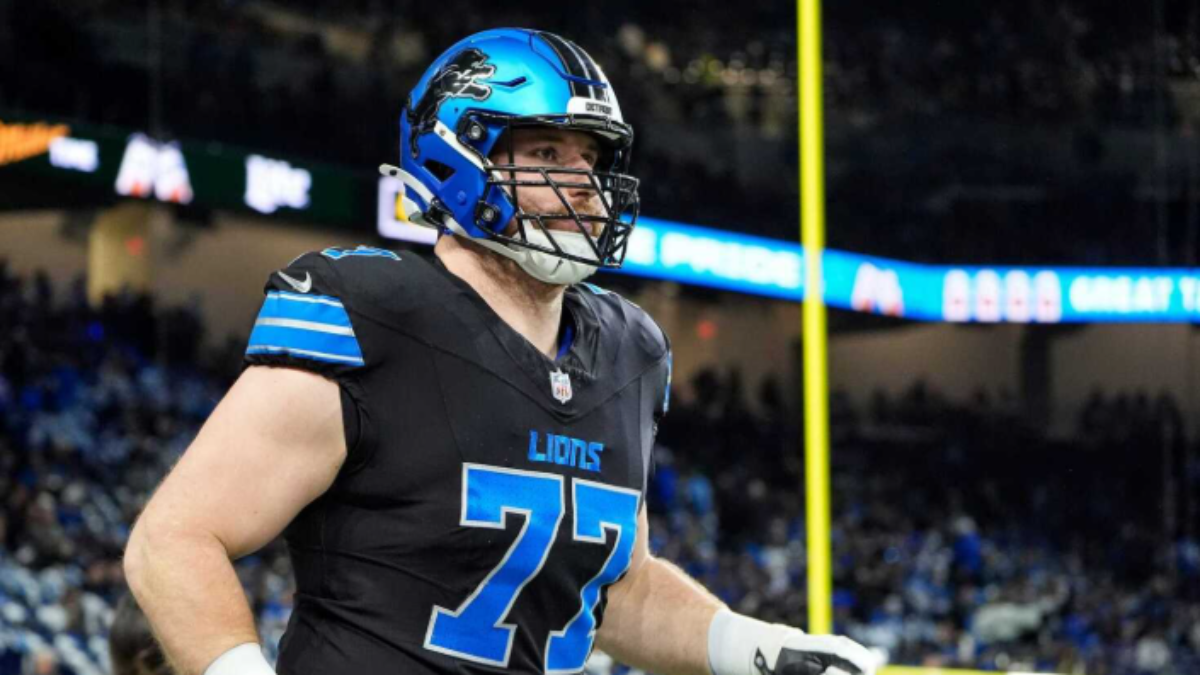
Ragnow signed a four-year, $54 million contract extension in May 2021. That deal included a $6 million signing bonus spread out as a $1.5 million salary cap hit through the 2026 season. When he walked away from the game in June 2025, two years remained on the deal. The math left $3 million on the table. Team president Rod Wood confirmed Tuesday that Detroit sought compensation, citing a strict organizational policy.
They didn’t just ask. They collected. Wood stood firm at the podium, defending a strategy that treats a physically broken player no differently than a healthy holdout.
This is not a new tactic for Detroit. The front office carries a notorious reputation for squeezing every cent out of its retiring legends. You can feel the icy tension between the organization and its past icons.
When Barry Sanders hung up his cleats in 1999, the Lions demanded money back. They did the exact same thing to Calvin “Megatron” Johnson in 2016, a decision that fractured the team’s relationship with the Hall of Fame receiver for years. Now, Ragnow joins that infamous list.
“Our precedent goes all the way back to Barry Sanders. And if Barry Sanders paid back money… they’re not paying back their money, they’re returning our money. Cause they were paid in advance for services that they hadn’t completed.”
— Rod Wood, Detroit Lions President
“This was clearly a player that the game had physically taken its toll on, and his body was clearly no longer holding up to the rigors of the NFL… it’s bulls–t Frank is being asked to return money.”
— Jason Kelce, Former NFL Center
Football demands a brutal physical toll. Ragnow gave Detroit his prime, operating as the heartbeat of a gritty offensive line. He played through a fractured throat. He snapped the ball weeks after a meniscus cleanup, stitches barely healed. He fought through an inoperable toe injury, a torn pectoral muscle, and chronic back issues. The stadium shook during those deep playoff runs, but Ragnow paid for that noise in the training room.
Ragnow actually tried to give Detroit more. With the offensive line struggling in November 2025, he attempted a midseason comeback. He failed the team physical due to a Grade 3 hamstring strain. His body quit long before his mind did. Yet, because he technically retired “voluntarily” in June without a prior medical disqualification, the Lions exploited a CBA loophole to raid his bank account.
Former Lions linebacker Alex Anzalone rushed to defend his former teammate. Anzalone highlighted the sheer absurdity of taxing a man who literally bled for the franchise. Kelce echoed the outrage, pointing out that guaranteed money exists explicitly to protect players when their bodies inevitably break down.
The Lions face a massive public relations headache heading into the 2026 NFL Draft and the remainder of free agency. Agents talk. Players notice. While Detroit holds the legal right under the collective bargaining agreement to claw back this cash, the optics are disastrous. Top-tier free agents weighing a move to the Motor City might second-guess a front office that nickel-and-dimes a warrior like Ragnow on his way out the door.
General Manager Brad Holmes and Head Coach Dan Campbell built a culture defined by loyalty and grit. Wood’s corporate collection agency routine directly threatens that hard-earned identity. If the Lions want to remain a premier destination in the NFC, they must fix this self-inflicted wound and mend fences with the players who build their brand.