

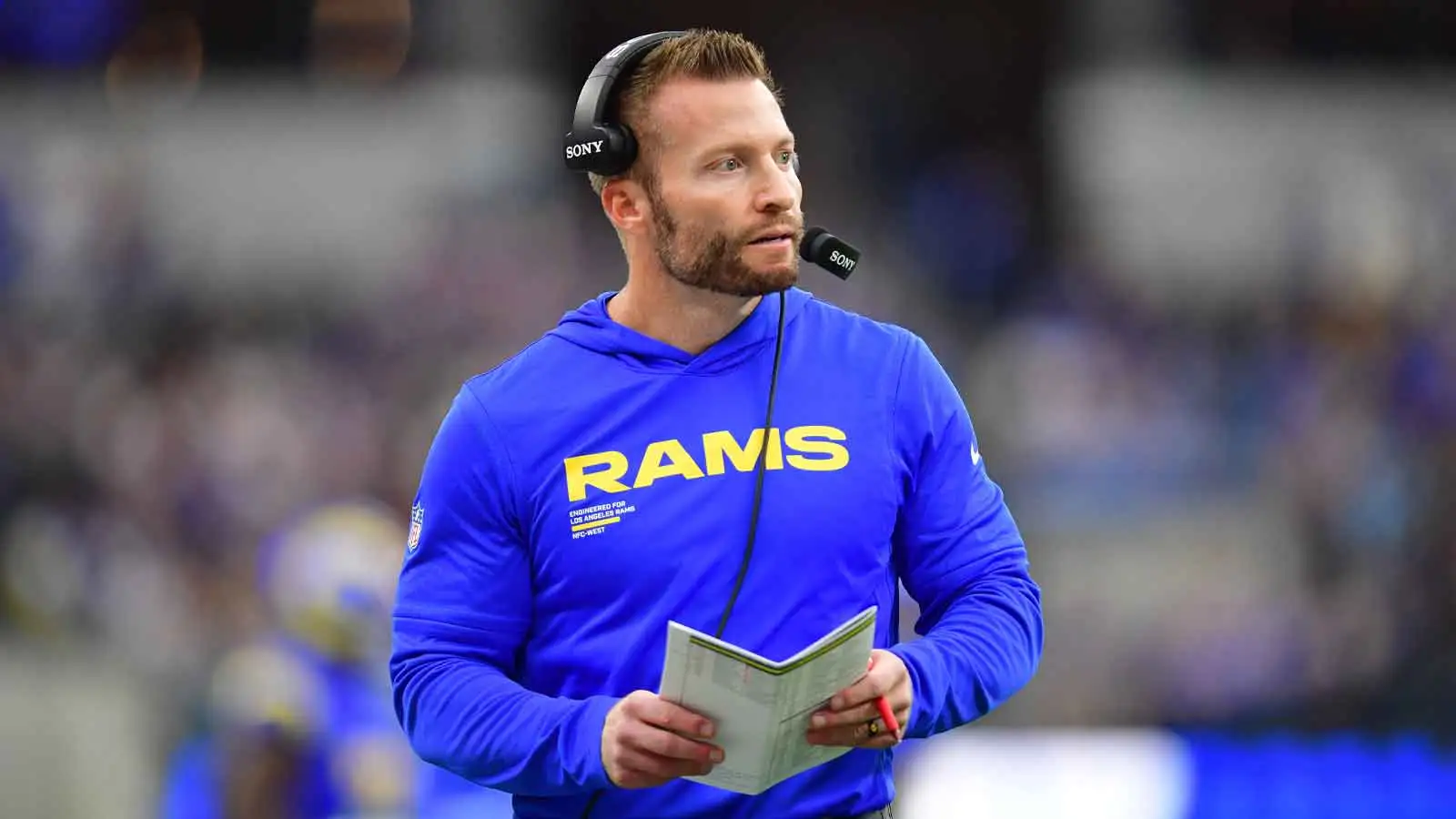
PHOENIX — The Cleveland Browns’ bid to revolutionize the NFL trade market lasted exactly as long as a Sean McVay eye roll. On Monday morning at the NFL Annual League Meeting, the Browns officially withdrew their proposal to allow teams to trade draft picks up to five years in the future. The decision came just hours after McVay, the Rams’ head coach and Competition Committee heavyweight, laughed off the idea on national television.
Cleveland GM Andrew Berry arrived in Phoenix hoping to expand the current three-year trade window. His logic was sound: more flexibility, better valuation of assets, and a “liquidity” boost for the league. But the Competition Committee met the idea with a cold shoulder. The committee voted 11-0 against the proposal, signaling that the league isn’t ready to let GMs mortgage a half-decade of their franchise’s future for a single run at a title.
McVay, whose Rams are famous for their “eff them picks” philosophy, didn’t hold back when he sat down with Kay Adams. He acknowledged Berry’s smarts but made it clear that some traditions aren’t moving. “There’s a 0% chance that goes through,” McVay said with a grin. “If there’s one thing that you can bet Vegas odds on, it’s that’s not getting through.”
“I respect the courage from Andrew to have a very sound reasoning… But I’m not backing that. Competition committee was 11-0. I’m on the competition committee.”
— Sean McVay, Los Angeles Rams Head Coach
The pushback stems from a deep-seated fear of “desperation moves.” While the NBA allows a seven-year window, NFL owners worry that a coach or GM on the hot seat might trade away 2030 and 2031 assets to save their job in 2026. This would leave a team’s next regime—and the fans—stuck in a multi-year rebuild with no draft capital to fix it.
The Rams themselves are the ultimate case study in why this rule won’t pass. GM Les Snead just traded away another first-rounder earlier this month to snag cornerback Trent McDuffie from Kansas City. If the window expanded to five years, aggressive teams like Los Angeles or Cleveland could potentially go five years without a single rookie of impact. For now, the “three-year rule” remains the league’s guardrail against total chaos.