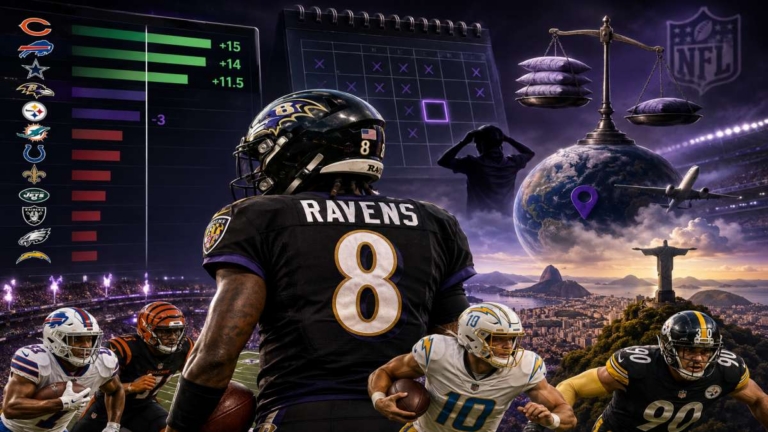


With the NFL locking in its first-ever regular-season game in Australia—a massive September 11, 2026 showdown between the Rams and 49ers in Melbourne—the physical toll on players is skyrocketing. But Edelman pointed straight at the soaring salary cap, specifically calling out Seattle Seahawks wideout Jaxon Smith-Njigba’s jaw-dropping new extension. Money talks, and right now, it screams.
Jaxon Smith-Njigba just shattered the wide receiver market, securing a four-year, $168.6 million extension with the Seahawks. That breaks down to a staggering $42.15 million per year. Edelman sees this cash explosion as the ultimate equalizer for the added physical abuse.
The brutal reality of an 18-game slate combined with grueling international travel—like the 15-hour flight Los Angeles and San Francisco will endure this September to reach the Melbourne Cricket Ground—means bodies will break down faster. You can almost hear the collective groan from veteran players icing their knees in training camp. Yet, Edelman argues the swelling revenue pie makes the suffering worthwhile. Every player entering the league now understands the bargain: sacrifice a little more longevity for generational wealth.
“Do you see what these guys are signing for? They’ll be all right. The bigger the game gets, the more the guys are going to get paid… I mean, Jaxon Smith-Njigba just got $42 million a year as a receiver. Would I have liked it as a player to play 18 games? No, but we’re making the game bigger. It’s a double-edged sword. It’s gonna suck because it’s gonna hurt a lot more, but the revenues are gonna be higher.”
— Julian Edelman, Former NFL Wide Receiver
The NFL’s aggressive push into the Asia-Pacific region is no longer a distant whiteboard concept. It is happening right now. Over 151,000 fans have already registered for tickets to watch the Rams and 49ers tear up the turf at the MCG. The crisp September air in Melbourne will soon host 100,000 screaming locals who are ready to turn the cricket ground into a gridiron fortress.
You look at a young superstar like Smith-Njigba, who just ground his way to an Offensive Player of the Year campaign with 1,793 receiving yards and a Super Bowl ring. He earned every cent of that $120 million guarantee. The expanded schedule offers him a chance to break even more records. But when that 18th game rolls around and the freezing rain is pouring down in late January, that check will feel like pure hazard pay.
How does an 18-game season change the geometry of a playoff run? It forces front offices to completely rethink roster construction. Depth is no longer a luxury; it is the sole requirement for a Super Bowl push. General managers must allocate serious cap space to backup quarterbacks and rotational pass rushers to survive the war of attrition.
Look at the NFC West. The Seahawks just tied up massive capital in Smith-Njigba, while the 49ers and Rams prepare for a brutal travel schedule right out of the gate in Week 1. A team dropping a crucial game in Melbourne due to jet lag could easily find themselves missing the postseason entirely in a hyper-competitive conference. The league demands more endurance, and only the deepest, wealthiest rosters will survive December.