

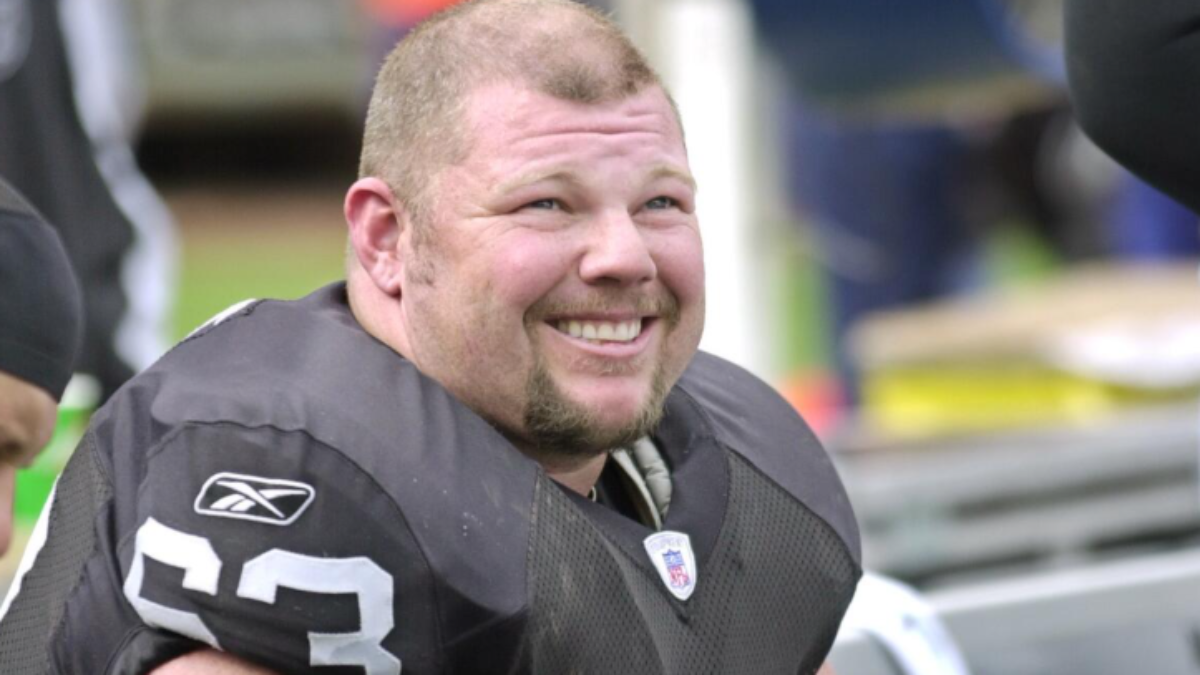
Robbins built a reputation as an immovable force. The Raiders drafted the TCU standout in the second round of the 1995 NFL Draft, and he quickly took over the trenches. By 2002, he reached the absolute peak of his profession, earning First-Team All-Pro and Pro Bowl honors. He played 121 career games, allowing his quarterbacks to throw for thousands of yards from a clean pocket. His snap counts were rhythmic. His blocks were punishing. You could hear the crack of his pads echoing from the upper deck whenever he pulled on a sweep.
Covering the NFL for NHANFL, I often watch old tape of that 2002 offensive line—they did not just block; they completely overwhelmed defensive fronts. The cold wind blowing through Network Associates Coliseum never slowed down Robbins as he commanded the line of scrimmage, pointing out blitz packages before the linebackers even twitched. He played with a fiery edge that intimidated defenses across the league.
“It’s with great regret I tell you I just received a call from Marissa Robbins informing me that Raiders All Pro center Barret Robbins passed away overnight. Thankfully, he passed peacefully in his sleep. Please pray for their girls, his family and tons of teammates who will be affected by this!”— Tim Brown, Hall of Fame Wide Receiver
“Sad to hear of the passing of my center and former teammate Barret Robbins. RIP my brother!”— Rich Gannon, 2002 NFL MVP
You cannot talk about Robbins without addressing the heartbreak of Super Bowl XXXVII. He disappeared the night before the biggest game of his life, turning up in Tijuana, Mexico, disoriented and confused. Coach Bill Callahan suspended him, and the Raiders lost to the Tampa Bay Buccaneers 48-21. Doctors later diagnosed Robbins with bipolar disorder, bringing an abrupt halt to his career and shedding light on the silent battles athletes fight away from the cameras. His life spiraled into legal and substance issues after football, but his teammates never stopped loving him.
The conversation around mental health in the NFL shifted because of men like Robbins. Today, the league mandates strict mental health protocols and provides psychological resources that simply did not exist in 2003. His passing forces the football community to look in the mirror. Front offices and the NFL Players Association must continue pushing for better post-career care for veterans who sacrificed their bodies and minds for the shield. The next step is ensuring no player ever slips through the cracks the way Robbins did during that chaotic week in San Diego.