

LOS ANGELES — The war rooms are tense, the whiteboards are full, and NFL scouts are currently tearing apart every quarterback in the 2026 draft class. But Kurt Warner has a specific message for them: stop overthinking the raw data. The Hall of Fame quarterback, who famously went from stocking grocery shelves to winning two NFL MVP awards, fired a warning shot at general managers this week. He urged teams to look beyond pure physical metrics and stop missing the intangible traits that actually win football games.
Warner knows exactly what it feels like when the league gets it wrong. In 1994, evaluators slapped limiting labels on him. They claimed he lacked elite athletic traits and questioned his level of competition at Northern Iowa. The NFL collectively passed, leaving him entirely undrafted.
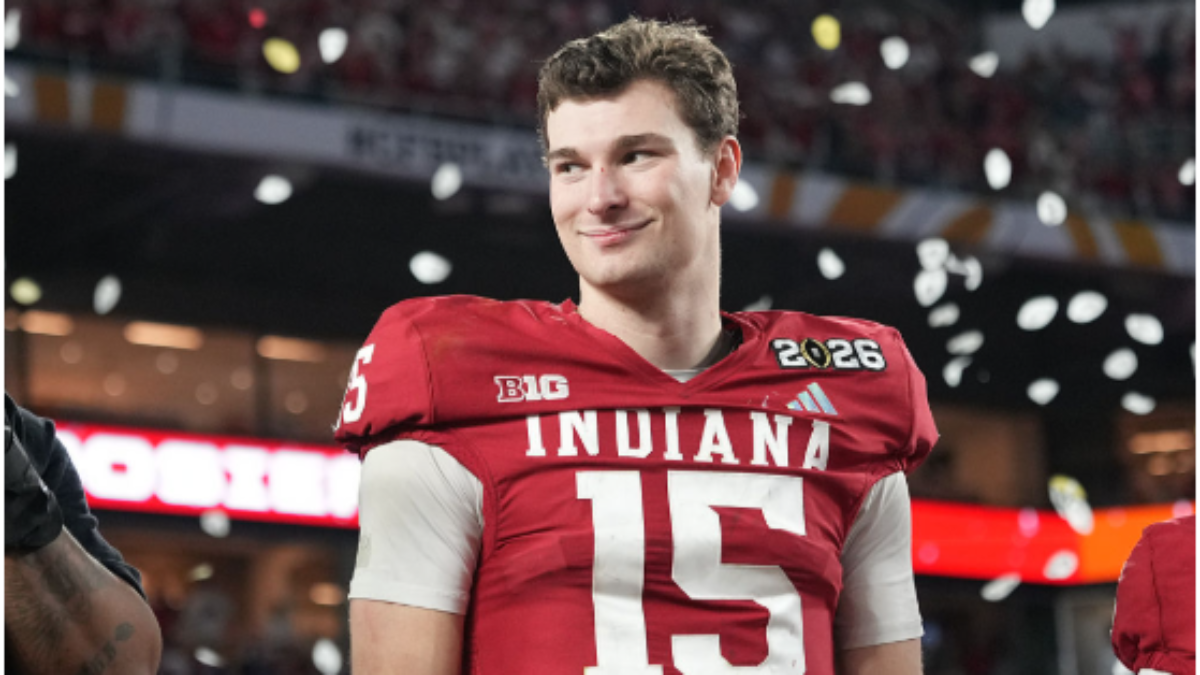
Today, as analysts obsess over hand size, arm angles, and track speed, the Super Bowl XXXIV MVP sees the exact same mistakes happening in real-time. Sitting in his film room breaking down the 2026 class for his video study series, Warner noticed a troubling trend. Teams excuse fundamental flaws for physical specimens. Warner pointed specifically to top prospects like Penn State’s Drew Allar and Indiana’s Fernando Mendoza. Allar possesses a cannon for an arm, but Warner quickly noticed the panic that sets in when his first read disappears. Mendoza boasts a pristine 16-0 record at Indiana, yet questions remain about his ability to carry a pro offense when defenses clamp down on his primary weapons.
You can almost feel the anxiety emanating from NFL front offices as the late April draft draws closer. Millions of dollars and the jobs of entire coaching staffs ride on getting the quarterback pick right. I watched Warner break down Alabama’s Ty Simpson earlier this week. The legendary quarterback stopped the tape, rewound a simple second-level throw, and pointed directly at the screen. He wasn’t looking at foot speed; he was evaluating processing speed.
Warner demands that scouts analyze how a player handles adversity. Does a prospect crumble under the pass rush, or do they keep their eyes downfield? It brings back vivid memories of Warner standing tall in the pocket wearing a Rams jersey, taking a crushing hit just as he released a deep touchdown pass. That is the exact type of grit he feels the current evaluation process completely misses.
“To me, those are the things that separate quarterbacks at the NFL level. There is no throw he is not able to make when his body is set, but what happens when you have to make the second-level throws?”
— Kurt Warner, Hall of Fame Quarterback
Warner’s plea throws a massive wrench into the traditional scouting pipeline. As we inch closer to the first round, teams holding top picks must decide whether to chase raw potential or draft pure instinct. If a general manager selects a heavily hyped project who lacks processing power, they risk setting their franchise back half a decade. Warner proved that the heart and the mind matter far more than the stopwatch. If front offices refuse to adapt, we might just see the next great American underdog slip right through their fingers and into the waiting arms of a division rival.