

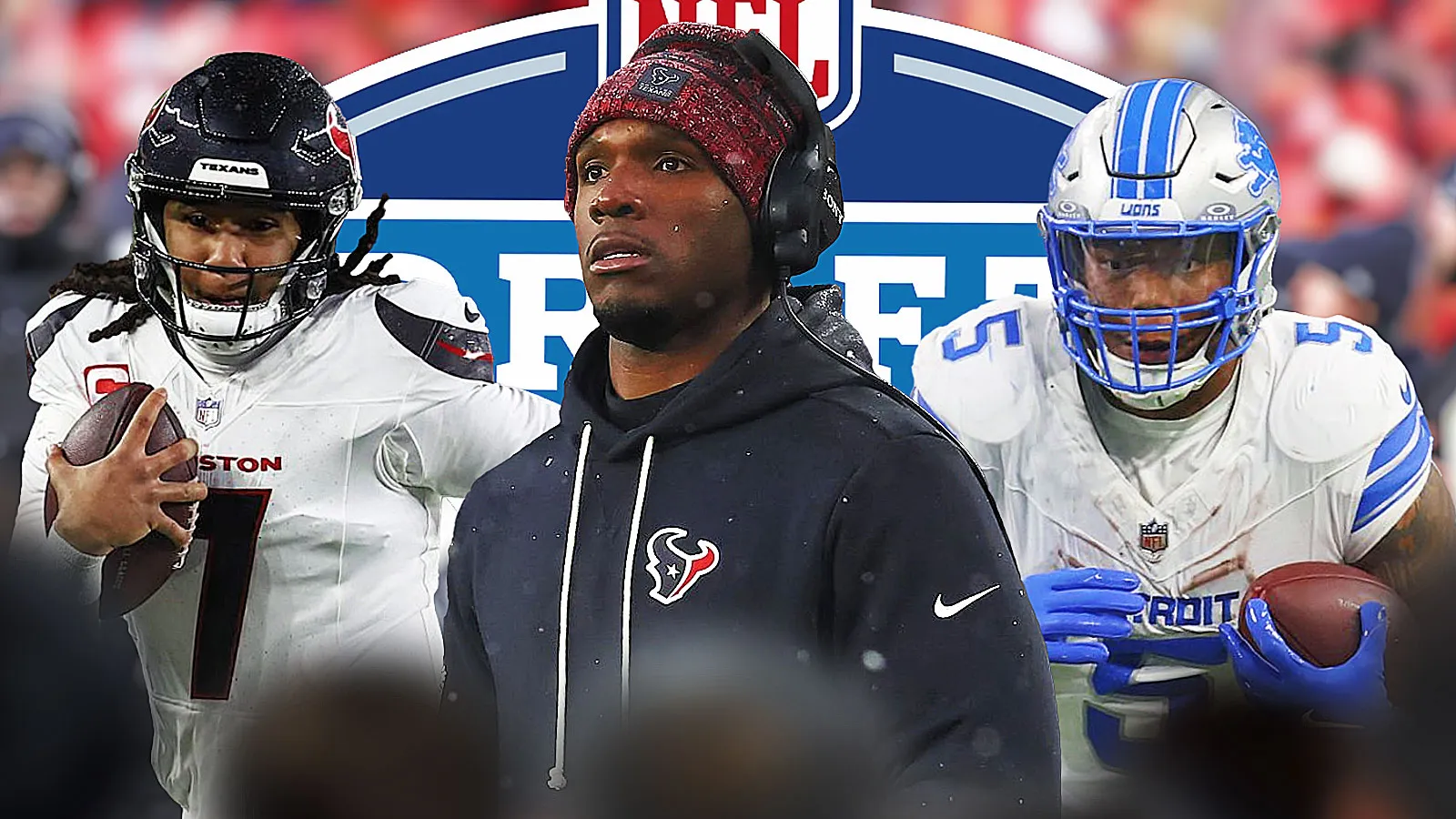
HOUSTON — The front office pushed their chips to the middle of the table, but the final bet remains unplaced. Fresh off a 12-5 campaign and a bitter 28-16 Divisional Round exit in Foxborough, general manager Nick Caserio spent the early weeks of March reinforcing the Houston Texans’ roster. They traded for David Montgomery. They signed Wyatt Teller. Yet, as the 2026 NFL Draft approaches, a glaring hole remains in the middle of DeMeco Ryans’ defense.
Houston built a juggernaut that allowed just 17.4 points per game in 2025, ranking second in the league. Derek Stingley Jr. and Kamari Lassiter turned the secondary into a nightmare for opposing quarterbacks. But when the January cold hit New England, the Patriots neutralized the Texans’ edge rushers by stepping up into a clean pocket. The middle broke, and the season ended.
Caserio acted fast when the new league year opened. Trading a fourth-round pick and Juice Scruggs to Detroit for Montgomery on March 2 injected instant violence into a rushing attack that struggled to find its footing last year. Securing Teller to a two-year deal weeks later signaled a shift toward pure, physical dominance up front. Houston wants to bruise opponents.
The front office retained Dalton Schultz and added safety Reed Blankenship to plug secondary gaps. On paper, the roster looks bulletproof. The reality inside the film room tells a different story. Against elite offensive lines, Houston failed to generate internal pressure without sending extra blitzers. Sheldon Rankins offers veteran stability, and Logan Hall flashes energy, but the unit lacks a true anchor who can blow up a double team and collapse a pocket organically.
“We left money on the table in January. You can have the best edge guys in the world, but if the quarterback can take one step up and breathe, he’s going to find a target. We need guys who make it miserable inside.”— Will Anderson Jr., Defensive End
The Texans sit in a rare position where they do not need to draft for volume. They need an apex predator. The draft offers the exact profile Houston requires: a day-one starter who dismantles blocking schemes from the snap. Clemson’s Peter Woods fits the archetype perfectly.
Woods brings raw power and explosive first-step quickness. He doesn’t just occupy blockers; he sheds them and forces running backs to change direction in the backfield. Pairing a 300-pound disruptor like Woods with Anderson on the edge forces offensive coordinators into a trap. If they slide protection inside to handle Woods, Anderson gets a one-on-one matchup. If they double Anderson, the middle of the pocket caves in.
You could feel the shift in the fan base during the Divisional Round loss. The traveling fans at Gillette Stadium went silent in the fourth quarter as the Patriots ground the clock down with inside runs. That cannot happen again if Houston wants to lift the Lombardi Trophy.
Houston’s championship window is wide open right now, but NFL windows slam shut without warning. The AFC South is no longer a cakewalk, with Jacksonville coming off a dominant 13-win season. The Texans fortified their offense to protect C.J. Stroud and run the ball late in games. Now, Caserio must secure an interior defensive lineman who commands respect from the opening whistle. If Houston nails this pick, they leap from a dangerous playoff team to the definitive AFC favorite. If they miss, they risk suffering another heartbreaking January defeat in the trenches.