

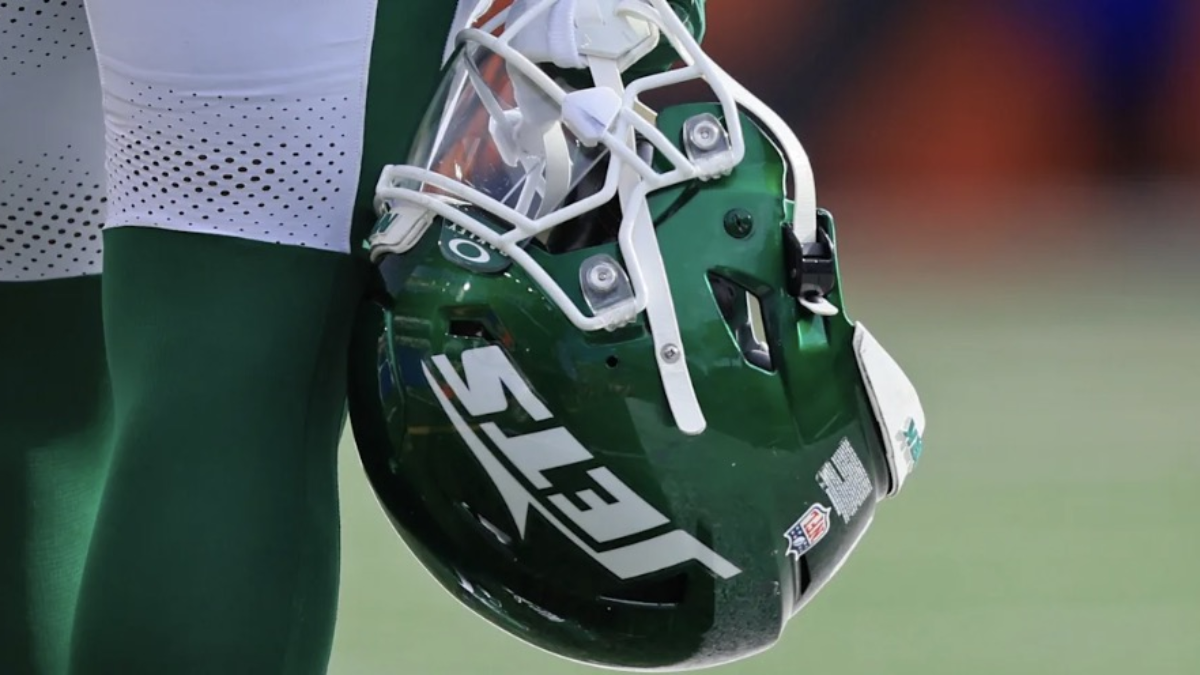
FLORHAM PARK, N.J. — The New York Jets are officially on the clock, and the stakes couldn’t be higher for a franchise coming off a bruising 3-14 campaign. With the No. 2 overall selection in the 2026 NFL Draft secured, General Manager Darren Mougey and Head Coach Aaron Glenn are staring down a definitive crossroads. After the Justin Fields experiment crumbled under a -203 point differential—the second-worst in the 17-game era—the “win-now” mandate from owner Woody Johnson has reached a fever pitch.
Draft night in Pittsburgh on April 23 is no longer just about hope; it’s about survival. Armed with the second pick and the No. 16 selection (acquired from Indy in the blockbuster Sauce Gardner trade), New York has the capital to reinvent its identity. While the quarterback room remains a massive question mark following Dante Moore’s decision to stay at Oregon, the consensus among league insiders suggests the Jets will look to the defensive side of the ball to ignite the rebuild.
The debate at the top of the board has narrowed to two blue-chip defenders: Ohio State’s Arvell Reese and Texas Tech’s David Bailey. Reese, a 6-foot-4, 243-pound freak of nature, became the talk of the Combine after a “show-stealing” workout that drew immediate comparisons to Micah Parsons. Reese finished the 2025 season with 8.0 sacks and 9.0 tackles for loss, showcasing a rare ability to play both off-ball linebacker and pure edge rusher.
However, some evaluators believe David Bailey is the safer bet for a regime that cannot afford a developmental project. Bailey was a statistical monster in 2025, leading the nation with 14.5 sacks and 19.5 tackles for loss. For a Jets defense that traded away Jermaine Johnson and struggled to generate consistent pressure, Bailey’s refined hand technique and “game-ready” motor might be too enticing to pass up. “Bailey doesn’t just win; he demoralizes tackles,” noted one AFC scout.
While the defense is the priority at No. 2, the No. 16 pick is widely expected to be used on a weapon for whoever lands the QB1 job. USC’s Makai Lemon has emerged as the heavy favorite here. The 2025 Biletnikoff winner was virtually unguardable last season, averaging 96.3 yards per game and racking up 1,156 receiving yards.
Lemon’s 21 forced missed tackles rank him among the elite creators in this class. Stylistically, he draws comparisons to Amon-Ra St. Brown—a high-IQ, physical slot-plus receiver who would perfectly complement Garrett Wilson. If the Jets want to climb out of the basement, giving Wilson a legitimate running mate is non-negotiable.
“We’re evaluating the quarterback position through every landscape—trade, free agency, the draft. Justin [Fields] is on the roster, but the dialogue is ongoing. We have to get this right. The fit with Coach Reich’s offense and Coach Glenn’s vision is paramount.”
— Darren Mougey, Jets General Manager
The most significant shift in the Jets’ building this offseason isn’t just the roster; it’s the coaching. Aaron Glenn has officially reclaimed defensive play-calling duties for 2026. This move suggests a return to the aggressive, man-heavy schemes Glenn favored during his time in Detroit. By targeting a hybrid defender like Reese or a pure closer like Bailey at No. 2, Glenn is essentially hand-picking the centerpiece for his revamped 3-4 front. With five first-round picks over the next two cycles, the Jets aren’t just drafting for 2026; they are attempting to build a foundation that can finally end a 15-year playoff drought.
Would you like me to break down the potential quarterback trade targets the Jets might pursue if they skip a passer at No. 2?