


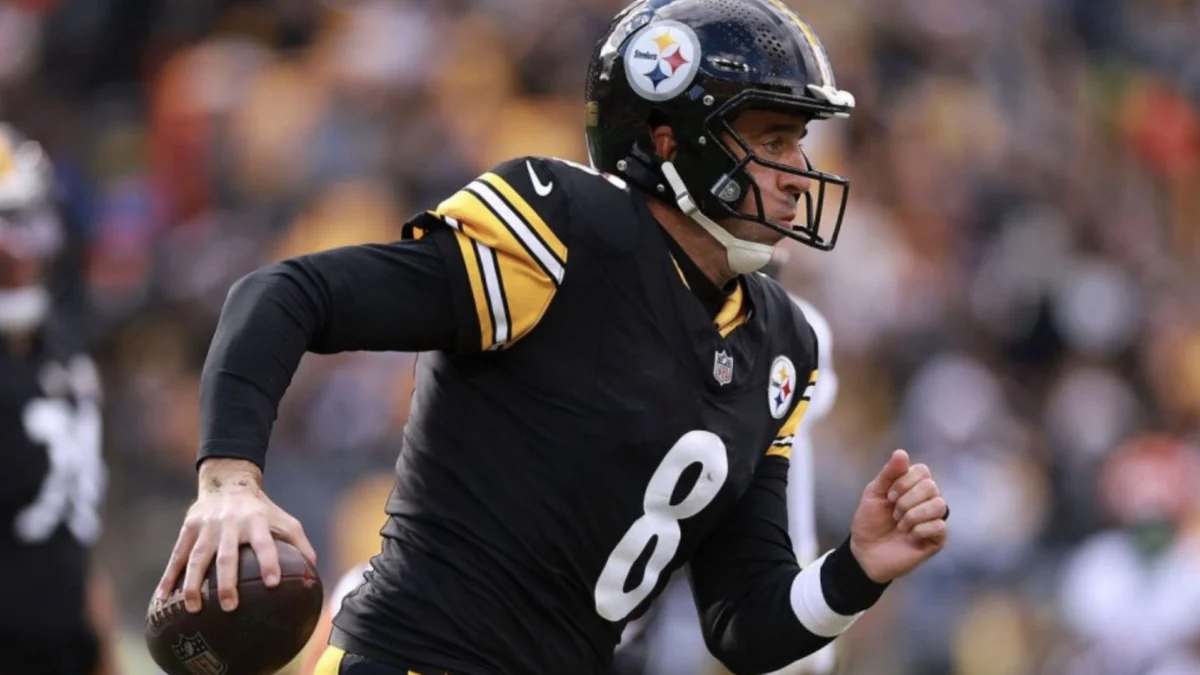
PITTSBURGH — The experiment worked, until it didn’t. Aaron Rodgers dragged the Pittsburgh Steelers to a 10-7 record and an AFC North crown in 2025. The quarterback room provided a desperately needed floor and masked deep offensive flaws. Then, the Houston Texans dismantled them 30-6 in the Wild Card round. The veteran stopped the bleeding, but he couldn’t punch through the ceiling.
The Rodgers Factor: Efficiency Over Explosiveness
Rodgers arrived in Pittsburgh as a 41-year-old mercenary. He started all 16 regular-season games, completing 65.7% of his passes for 3,322 yards, 24 touchdowns, and only 7 interceptions. His 94.8 passer rating ranked 12th in the NFL. He didn’t turn the ball over. He managed the clock. He found wide receiver D.K. Metcalf for an 80-yard bomb against the Bengals that practically saved the season.
The bitter wind whipping through Acrisure Stadium in December seemed to mirror the offense: resilient, but lacking a true spark. Rodgers averaged a career-low 6.7 yards per attempt. The offensive line leaked constantly, allowing pressure on 35.2% of dropbacks and forcing the immobile veteran to eat 29 sacks. The offense crawled to 15th in scoring at 23.4 points per game. He was an elite game manager, but he couldn’t play superhero anymore.
“This was really about finishing with a lot of love and fun and peace for the career that I’ve had. I’m going to give the Steelers everything that I got and empty the tank.”
— Aaron Rodgers, Pittsburgh Steelers Quarterback
The Insurance Policy: Mason Rudolph
When Rodgers needed a breather or took a hard hit, Mason Rudolph stepped in. Rudolph saw action in five games, finishing 38-of-52 for 310 yards. He threw two touchdowns and two picks. Rudolph kept the ship steady, notably delivering a sharp second-half performance to put away the Cleveland Browns in Week 13. He executed Arthur Smith’s simplified calls effectively, taking only two sacks.
Rookie Will Howard spent the entire year on injured reserve with a shoulder injury. Skylar Thompson held a clipboard. The lack of reliable depth beyond Rudolph remains a glaring issue going into the offseason.
Playoff Implications / What’s Next
The playoff embarrassment against Houston exposed a harsh reality: a stationary quarterback and a pedestrian rushing attack cannot win a championship in today’s NFL. Rodgers managed just 146 passing yards in that elimination game.
Now, the 2026 offseason looms large. Mike Tomlin stepped down, fundamentally altering the franchise’s trajectory. The front office brought in Mike McCarthy, reuniting him with Rodgers and sparking serious momentum that the veteran will return for one final ride. If Rodgers officially commits, Pittsburgh has their bridge. If he walks away, the franchise plunges into an immediate crisis. They hold the 21st overall pick and face a barren free-agent market. The front office must aggressively overhaul the offensive line and find a dynamic running back, or 2026 will end exactly like 2025.


