


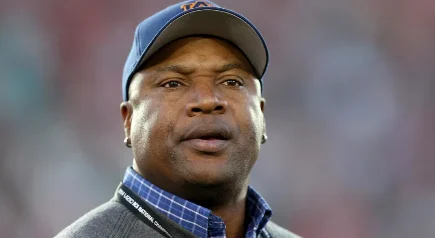
AUBURN, Ala. — Bo Jackson didn’t just play football; he ran through walls. But the man who turned 4,303 rushing yards and 43 touchdowns into a mythic legacy at Auburn believes modern players are running in the wrong direction: away from the grind. In a blistering appearance on The Big Podcast with Shaq, the dual-sport icon slammed the current NIL and transfer portal system, calling it a loophole that breeds quitters rather than competitors.
The “Escape Route” Mentality
Jackson didn’t mince words. The 1985 Heisman winner sees the transfer portal not as a tool for player freedom, but as an eject button for adversity. In his eyes, the gritty path of sticking with a program—the path that made him the No. 1 overall pick in the 1986 NFL Draft—is dead.
“To be honest, I think it’s teaching young kids how to run away from their problems,” Jackson told Shaq. “You get pissed off because I yell at you for doing the dumb things on the field, so you’re gonna go enter the transfer portal and take that money with you. No, it shouldn’t work like that.”
The numbers back up Bo’s frustration. Roster turnover in college football has hit warp speed. Look at the newly crowned 2026 National Champion Indiana Hoosiers. Their roster featured 14 starters who were portal imports—mercenaries hired to win a trophy. Contrast that with the NFL, where development still reigns. The Philadelphia Eagles captured Super Bowl LIX by drafting and developing their core, adding just eight starters through free agency or trades.
“I love it that the kids can be compensated, but there should be rules and guidelines for that compensation, to hold them accountable to that. We need to make sure we’re doing this thing in unison.”
— Deion Sanders, Colorado Head Coach
The $4 Million Question
The chaos isn’t just about movement; it’s about the price tag. Carson Beck’s jump from Georgia to Miami for a reported $4 million NIL package proves that staying in school is now often more lucrative than a late-round NFL rookie contract. This financial tug-of-war has drawn the eyes of Washington.
Senator Eric Schmitt has seen enough. He recently unveiled a legislative blueprint to stabilize the sport. His “Pillar Three” targets the root of the issue: returning NIL to its original purpose—true market value for endorsements—and eliminating the “fake contracts” that function as pay-for-play salaries without regulation. With heavyweights like Bo Jackson and Coach Prime demanding a fix, the pressure is mounting on Congress to save college sports from itself.
What’s Next
The debate moves from the podcast mic to Capitol Hill. With the 2026 season in the books and Indiana proving that “buying” a team works, expect lawmakers to push Schmitt’s framework aggressively before kickoff next fall. If they don’t, the transfer portal will continue to turn college football into the Wild West.


