


DENVER — The 2025 season proved that the Denver Broncos are back in the contenders’ circle, securing the 30th overall pick after a deep playoff push. But let’s be honest about what kept them from the ultimate prize: the drops. Bo Nix commanded the offense, and Courtland Sutton remained the alpha, but the revolving door at WR2 stalled drives when it mattered most.
Troy Franklin flashed with over 700 yards, but inconsistency plagued his sophomore campaign. Marvin Mims Jr. hasn’t locked down a role entering his contract year, and Pat Bryant looks more like a depth blocker than a starter. Sean Payton needs a legitimate weapon—someone who doesn’t just get open, but actually catches the rock.
The veteran market is pricey. The draft is deep. Here is the realistic board for Denver at pick No. 30 and beyond.
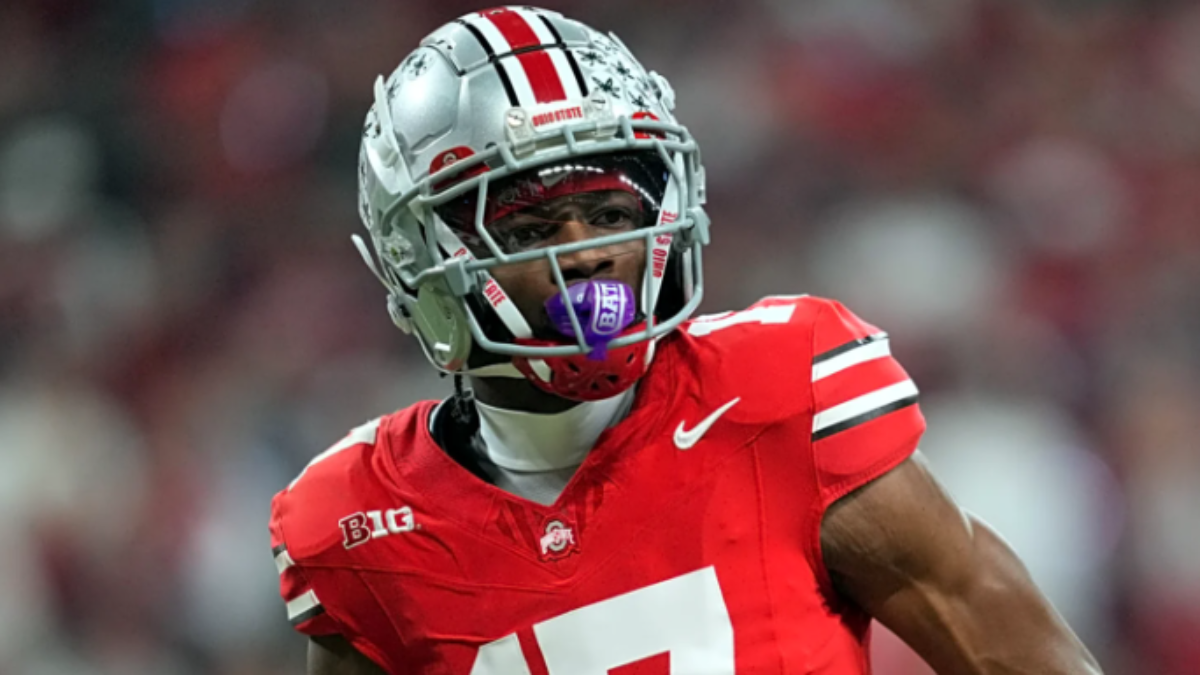
The Pipe Dream: Carnell Tate (Ohio State)
If the draft gods smile on Denver, Carnell Tate slides. Currently projected as a top-10 lock, Tate is the prototype Sean Payton receiver: big, tough over the middle, and a willing blocker. He isn’t just a complement to Sutton; he’s the heir apparent.
Trading up from 30 to the top 10 is likely too rich for GM George Paton’s blood. But if quarterbacks fly off the board early and push talent down, Tate becomes the “sprint to the podium” pick. He brings immediate WR2 star power with a WR1 ceiling.
The Hoosier Risers: Cooper & Sarratt
Indiana’s run to the National Championship wasn’t a fluke, and their receivers are capitalizing on the spotlight. Omar Cooper Jr. is the hottest name on the board, rocketing into the top 30 discussion. Nearly 500 of his 937 yards came after the catch (YAC). He attacks the ball at the catch point—a trait Denver desperately missed last season.
“Cooper plays angry. He’s a fine blocker, reliable in traffic, and suddenly looks like he might jump Denzel Boston and Jordyn Tyson on final boards.”
— Western Conference Scout
His teammate, Elijah Sarratt, offers a different flavor. He’s a basketball player on turf—boxing out defenders and winning back-shoulder fades. He lacks elite explosion but compensates with pure ball skills. He’s the “safety blanket” Nix needs on 3rd-and-6.
The Slot Specialists: Replacing Mims?
With Marvin Mims Jr. entering the final year of his deal without a breakout, Denver might look to reset the clock on a slot speedster.
- Makai Lemon (USC): A polished route runner who is miles ahead of where Mims is technically. He averages nearly 15 yards per catch and brings the explosiveness Denver’s offense lacked. The issue? He’s likely a top-12 pick.
- KC Concepcion (Texas A&M): A gadget-style player projected for the late first or early second round. The hands are a worry—he double-clutches too often—but his playmaking ability in space mirrors Mims. He’s a project, but a dangerous one.
The Physical Threats: Boston & Fields
If Payton wants a bully, Denzel Boston (Washington) fits the bill. A late first-round projection, Boston is a contested-catch merchant with soft hands. He isn’t burning anyone on a go-route, but in the red zone, he’s a problem. He mirrors Sutton’s profile, perhaps to a fault.
Later in the draft, keep an eye on Malachi Fields (Notre Dame). He’s raw and his route tree is limited, but you can’t teach his size and catch radius. He’s a developmental piece who could pay dividends in 2027.
The Medical Gambles
Two names carry massive talent but terrifying medical flags.
Jordyn Tyson (Arizona State) looked like a top-10 talent in 2025, showing improved hands and YAC ability. But his knees are a ticking clock; watching him grab his legs after tackles is unsettling. If the medicals clear, he’s a steal at 30. If not, he’s off the board entirely.
Then there’s Chris Bell (Louisville). Before tearing his ACL, he was a top-25 prospect. Now? He’s likely a Day 2 pick who starts the season on PUP. For a team needing immediate help, this is a tough sell, but a healthy Bell in November could be the mid-season acquisition that fuels a Super Bowl run.
NHANFL Verdict
Denver sits in a tricky spot. They are too good to draft the blue-chip elites without a trade, but desperate enough for help that they can’t afford a project. Omar Cooper Jr. feels like the sweet spot between value, need, and immediate impact.


