

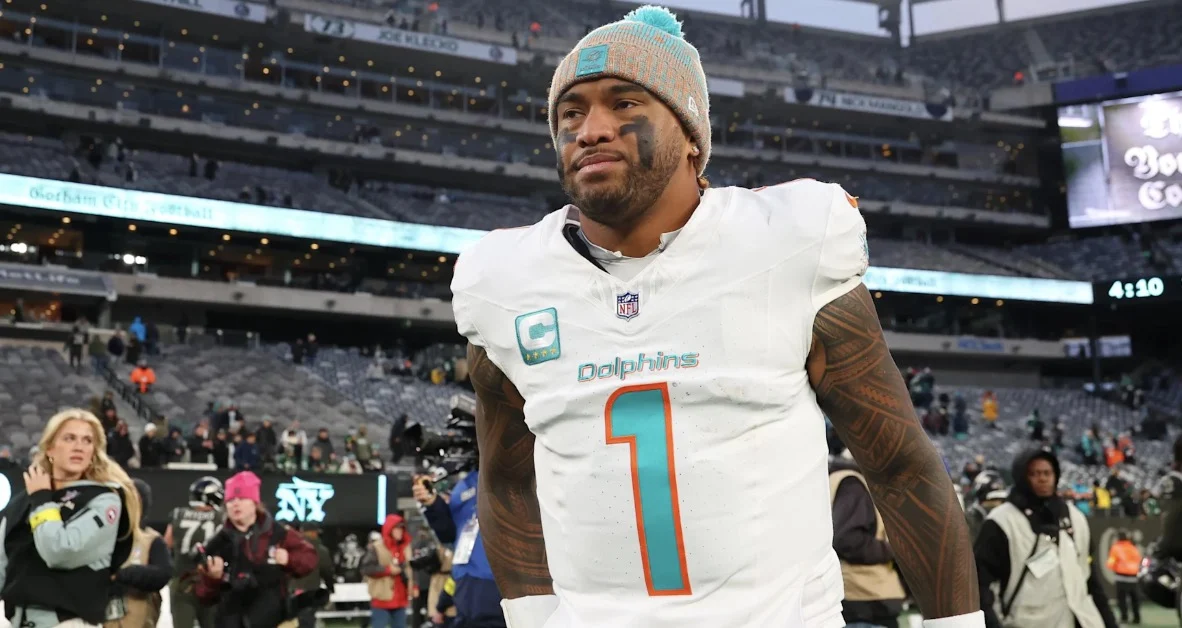
MIAMI GARDENS, Fla. — The writing isn’t just on the wall; it’s practically painted on the end zones at Hard Rock Stadium. After a turbulent 2025 campaign that saw Tua Tagovailoa benched for rookie Quinn Ewers down the stretch, the Miami Dolphins have made their stance clear: they want out of the Tua business. But they aren’t looking for a clean break—they’re looking for a deal.
Sources close to new General Manager Jon-Eric Sullivan confirmed Sunday that the Dolphins’ priority is trading Tagovailoa rather than releasing him. The math dictates the move. Cutting the former passing yardage leader would trigger a catastrophic dead cap hit—either $99 million immediately or a slightly more palatable $67 million with a post-June 1 designation. Neither option helps a roster desperate for retooling.
A trade, however, offers a lifeline. While Miami would still likely have to eat a significant portion of Tagovailoa’s $54 million guaranteed salary for 2026 to sweeten the pot, getting another franchise to pick up the check—even a partial one—is the only way to avoid a total financial meltdown. The team hopes Tagovailoa’s résumé, which includes leading the NFL in passer rating (2022), passing yards (2023), and completion percentage (2024), still holds weight despite his durability red flags and a regression in 2025.
Just as the Dolphins’ front office began identifying trade partners, a wrench was thrown into the gears Sunday morning. Former Raiders and Saints starter Derek Carr is reportedly eyeing a comeback after sitting out the 2025 season. This development is a nightmare for Miami’s leverage.
Why trade draft capital and absorb a massive contract for Tagovailoa when you could sign a refreshed Carr for significantly less? The free-agent quarterback class was supposed to be thin, featuring names like Malik Willis, Daniel Jones, and an aging Russell Wilson. Carr’s re-entry instantly dilutes the market, giving QB-needy teams a viable alternative that doesn’t require surrendering picks.
“It’s a business, man. We all know that. But when you see the QB1 spot in flux like this, it changes the energy. We just want to know who’s slinging the rock so we can get to work.” — Anonymous Dolphins Offensive Starter
If Miami pulls this off, the suitor will likely play in a dome or a warm-weather city. Tagovailoa’s arm strength limitations in cold weather are well-documented, making teams like the New York Jets a clumsy fit, though desperation often blurs schematic lines.
The Dolphins are playing a high-stakes game of chicken. If they can’t find a trade partner before the new league year begins in March, they face a grim choice: keep an expensive, benched quarterback on the roster or swallow a historic dead cap pill. With Kyler Murray also rumored to be on the block, the market for reclamation projects is crowded. Sullivan’s first big test as GM isn’t about who he brings in—it’s about how gracefully he can usher the Tua era out.