

SANTA CLARA, Calif. — The fog has rolled into the Bay Area, and Levi’s Stadium is already buzzing for a Super Bowl LX showdown that few saw coming: the New England Patriots versus the Seattle Seahawks. But while the national media obsesses over this week’s practice reports and the Patriots’ resurgence, a different debate is brewing in South Florida.
Before the confetti falls on Sunday, let’s settle a historical score. The Miami Dolphins, currently amid a drought that makes the Sahara look lush, once owned this stage. They remain the only franchise to complete a perfect season. Yet, when you strip away the romanticism of “17-0” and look at the cold, hard film, a controversial truth emerges: The perfect team wasn’t their best team.
Call it blasphemy. Call it revisionist history. But the 1973 Dolphins (12-2) were a more lethal machine than their undefeated predecessors. While they lost two games, their dominance in the postseason was terrifying. They didn’t just win; they steamrolled opponents, boasting an average playoff margin of victory of 17.3 points.
Consider the gauntlet: The ’72 team faced a historically soft schedule (no regular-season opponent finished better than 8-6). The ’73 squad, however, dismantled the Raiders and Vikings with surgical precision, fueled by a defense that allowed a meager 10.7 points per game. When they hit the playoffs, they won by 18, 17, and 17 points. That is not luck; that is total subjugation.
We can hear the champagne popping from here. We aren’t trying to upset Larry Csonka, but the “Perfect Season” relied on thin margins. The 1972 Dolphins are one of only three Super Bowl champions—alongside the 2001 Patriots and 2022 Chiefs—to not win a single playoff game by more than seven points.
They allowed more points than the ’73 unit and scraped by in the playoffs, winning their three postseason games by a combined total of just 17 points. They were clutch, resilient, and historic—but they weren’t the overpowering force that arrived a year later.
This team didn’t win the ring, but they won history. Dan Marino’s sophomore campaign remains the gold standard for quarterback play. Starting 11-0 and finishing 14-2, Marino shattered the logic of 1980s football, throwing for 5,084 yards and 48 touchdowns. Even without a dominant defense or running game, the passing attack was so prolific it nearly carried them to the promised land. They simply ran into a buzzsaw: the 1984 San Francisco 49ers, perhaps the most balanced team ever assembled.
Before the dynasty, there was the hunger. The 1971 squad (10-3-1) was teeming with raw talent that hadn’t yet hardened into championship material. They delivered the franchise’s breakthrough moment—winning the longest game in NFL history against the Chiefs on Christmas Day. But their youth showed in Super Bowl VI. They committed three turnovers in a 24-3 drubbing by Dallas, a game famously remembered for Bob Griese taking a calamitous 29-yard sack. It was a harsh lesson, but a necessary one.
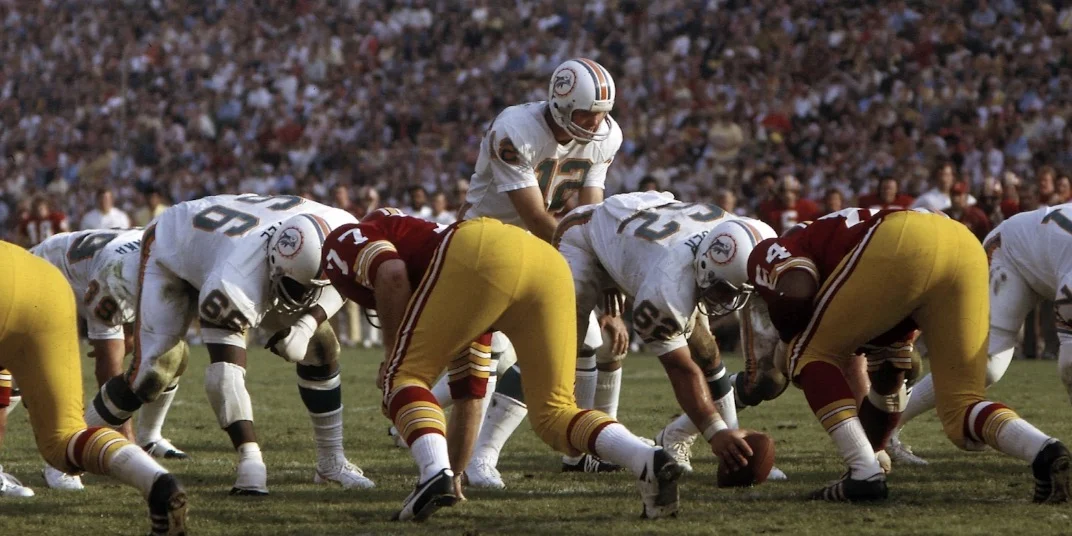
In a strike-shortened nightmare of a season, the Dolphins navigated a minefield to reach the Super Bowl. They finished 7-2, riding the backs of the “Killer B’s” defense—arguably the best defensive unit in team history. They swept through the Patriots, Chargers, and Jets in the playoffs. The problem? The offense was stuck in neutral. The passing game lacked the explosive power needed to keep up with Washington, a deficiency that led directly to the drafting of Dan Marino months later.
“I don’t care how many times the other teams dominated… they lost a frickin’ game. Perfection is perfection. Close? Get a cigar. There’s only one team that drinks the champagne.” — Larry Csonka, Hall of Fame Fullback, on the ’72 vs ’73 debate
As we watch New England and Seattle prepare for Sunday, the lesson from Miami is clear: Regular season records are nice, but postseason dominance defines legacies. The 1973 Dolphins didn’t care about perfection; they cared about crushing the opponent. Whether the Patriots or Seahawks can replicate that killer instinct at Levi’s Stadium will determine who hoists the Lombardi Trophy this weekend.