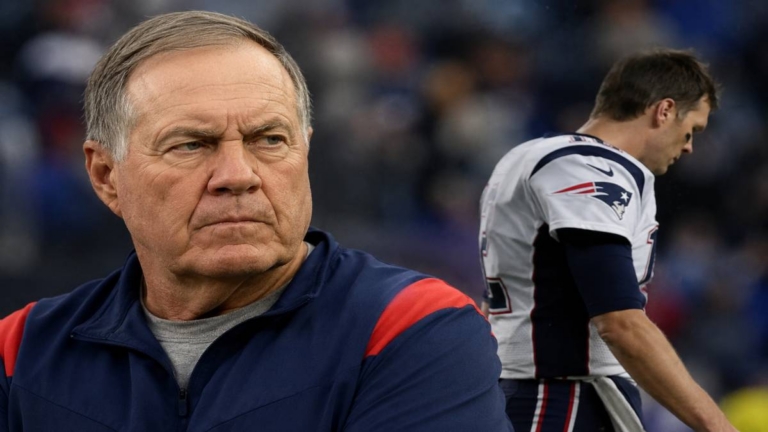


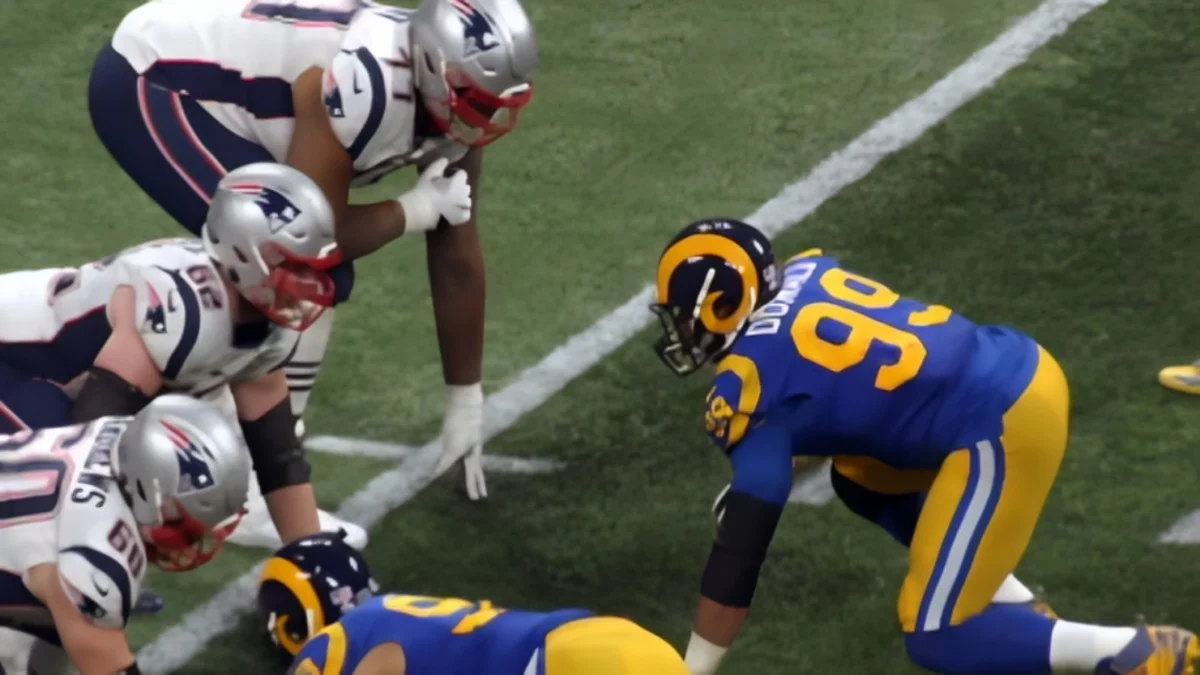
ATLANTA — The final score read 13-3, the lowest-scoring slog in Super Bowl history. But behind the punts and the defensive gridlock, a psychological war raged between the greatest quarterback ever and the most terrifying defensive force of a generation. Tom Brady didn’t just beat the Rams; he survived Aaron Donald by executing a game plan that treated the defensive tackle like a live grenade.
New England entered Mercedes-Benz Stadium with one objective: don’t let #99 ruin the game. To do it, Brady operated on a hair-trigger. He released the ball in an average of 2.44 seconds, effectively turning the Rams’ pass rush into a track meet they couldn’t win. While Donald racked up 20.5 sacks in the 2018 regular season, he left Atlanta with zero sacks, zero tackles for loss, and just one quarterback hit.
The Patriots didn’t just double-team Donald; they bracketed him with Joe Thuney and David Andrews on almost every snap. Mic’d up footage recently resurfaced on X (formerly Twitter) showing a frustrated Donald barking at the Patriots’ offensive line, begging for “one-on-one” opportunities that never came. The strategy forced the Rams to win elsewhere, and they simply couldn’t find the answers.
“There’s one guy late in my career who every time we played him he was an absolute nuisance. In the Super Bowl against the Rams, we actually limited him because every single play—run or pass—was designed to keep him out of the backfield. He forced us to do things we didn’t want to do.” — Tom Brady, FOX Sports Analyst (Former Patriots QB)
While the game lacked the offensive fireworks fans crave, it serves as the ultimate blueprint for neutralizing a generational talent. Bill Belichick and Josh McDaniels sacrificed offensive rhythm to ensure Donald never got a clean look at Brady’s jersey. The result was a sixth Lombardi Trophy and a reminder that sometimes the best offense is a relentless, disciplined protection scheme.
Donald eventually got his ring in Super Bowl LVI, but the “what if” of Atlanta remains a career-defining chess match. For Brady, it wasn’t about the 262 passing yards; it was about the hits he didn’t take.