

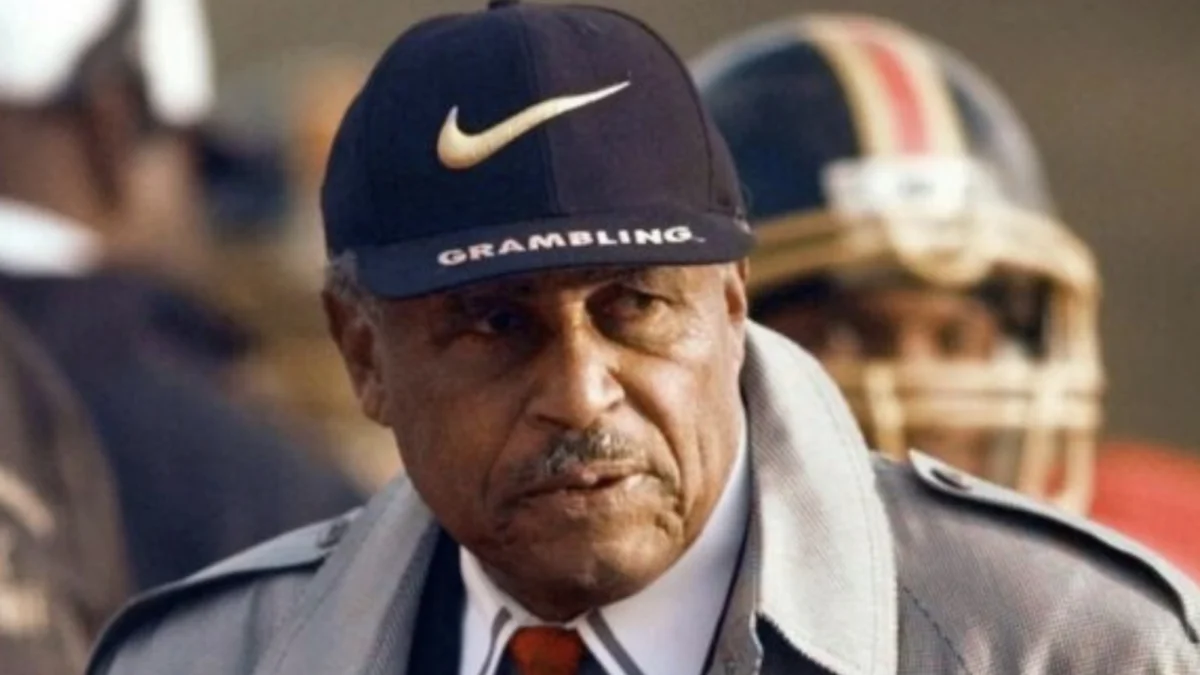
GRAMBLING, La. — Eddie Robinson didn’t just coach football; he built an NFL pipeline from the ground up. If you want to talk about the greatest American football coach of all time, the conversation starts and stops in northern Louisiana. Robinson racked up 408 career coaching victories during his staggering 57-year tenure at Grambling State University. He became the first college head coach to shatter the 400-win ceiling. Yet, his raw win total only scratches the surface of his true impact on the gridiron.
Robinson essentially dragged pro football into the modern era. Long before the league fully integrated its premier positions, Robinson was molding the trailblazers who would break down those doors. He sent over 200 players to the pros. That staggering output recently pushed him into the spotlight as one of the 25 candidates evaluated by the Pro Football Hall of Fame’s Blue Ribbon Panel for the 2025 contributor category. As we move deeper into the 2026 season, the push for his permanent spot in Canton grows louder.
Walk near the Grambling practice fields on a crisp fall morning, and you can still feel the weight of Robinson’s legacy. He demanded perfection, and his players delivered. From 1960 to 1986, Grambling didn’t suffer a single losing season. That is 27 consecutive years of absolute dominance. During a peak stretch between 1965 and 1985, Robinson’s squads won nearly 80% of their matchups, posting a ridiculous 172-49-3 record.
He claimed 9 Black College National Championships and 17 SWAC Conference titles across five different decades. He outsmarted opponents and outworked rival recruiters. Four of his former collegiate stars—Junious “Buck” Buchanan, Gary “Big Hands” Johnson, Paul “Tank” Younger, and Doug Williams—earned spots in the College Football Hall of Fame. Robinson himself bypassed the mandatory three-year waiting period. The College Football Hall of Fame immediately inducted him upon his retirement in 1997. They knew they were watching a living legend.
The NFL looks entirely different today because of the foundation Robinson laid. In 1949, he guided Paul “Tank” Younger to the Los Angeles Rams. Younger became the first African American player from a historically black college to sign an NFL contract. A little over a decade later, Robinson’s prized pupil, Buck Buchanan, went No. 1 overall to the Kansas City Chiefs in the 1963 draft. No player from an HBCU had ever been taken first overall before.
Robinson also destroyed the stubborn racial barriers surrounding the quarterback position. He groomed James “Shack” Harris, who shattered the glass ceiling to become the first Black quarterback to start a season opener, win a playoff game, and earn Pro Bowl MVP honors. Then came Doug Williams. Williams took Robinson’s teachings all the way to the Super Bowl, becoming the first Black quarterback to win the Lombardi Trophy and take home Super Bowl MVP honors.
Consider this absolute jaw-dropper: During the 1971 NFL training camps, 43 former Grambling Tigers fought for roster spots. Over his career, Robinson’s players logged nearly 500 combined seasons in the professional ranks. Four of them—Willie Brown, Willie Davis, Buck Buchanan, and Charlie Joiner—wear gold jackets today.
“Coach Robinson didn’t just teach us how to block and tackle. He taught us how to be men in a world that wasn’t always ready for us. He expected greatness, so we gave him greatness.”
— Doug Williams, Super Bowl XXII MVP & Former Grambling State Quarterback
The Pro Football Hall of Fame selection committee faces massive pressure to finalize Robinson’s enshrinement in the upcoming voting cycles. While the 2025 contributor class has already made headlines, the continued advocacy from the NFL Players Association and Hall of Fame veterans keeps Robinson’s name at the forefront for the 2026 and 2027 classes. Recognizing him isn’t just about handing out a plaque; it is about correcting the historical record. As the NFL expands its diversity initiatives this year, officially enshrining the man who single-handedly integrated the league’s most crucial positions offers the ultimate validation. Fans and historians alike are watching the committee’s next move closely.