


INDIANAPOLIS — Forget the marching bands and the mascots for a second. Look at the iPad on the sideline. In 2026, college football shed its amateur skin. It’s no longer a loose collection of feeder teams; it is the NFL’s primary development league, operating with cold, professional efficiency. The gap between a Saturday night in Columbus and a Sunday afternoon in Cleveland has never been smaller.
The days of “raw athletes” relying on pure instinct are over. Today’s top prospects, like the surging class of 2026, step onto campus and immediately punch the clock. Programs like Alabama, Ohio State, and Notre Dame don’t just coach kids; they install NFL operating systems. The result? A pipeline that churns out rookies who treat their first minicamp like a refresher course rather than a steep learning curve.
Schemes That Translate, Not Just Score
Go back five years, and spread offenses often masked a quarterback’s inability to read a full field. That doesn’t fly anymore. Offensive coordinators now blend West Coast precision with Air Coryell verticality. They force quarterbacks to manage protections and identify the “Mike” linebacker before the headset cuts off.
Receivers aren’t just running go-routes; they execute option routes based on coverage leverage. Tight ends motion into the backfield to block like H-backs. If you can’t digest a playbook thick enough to stop a door, you don’t play. This shift explains why the “bust rate” for first-round picks is dropping. Teams aren’t guessing on talent; they are drafting qualified professionals.
The Mendoza Line: Processing Over Arm Strength
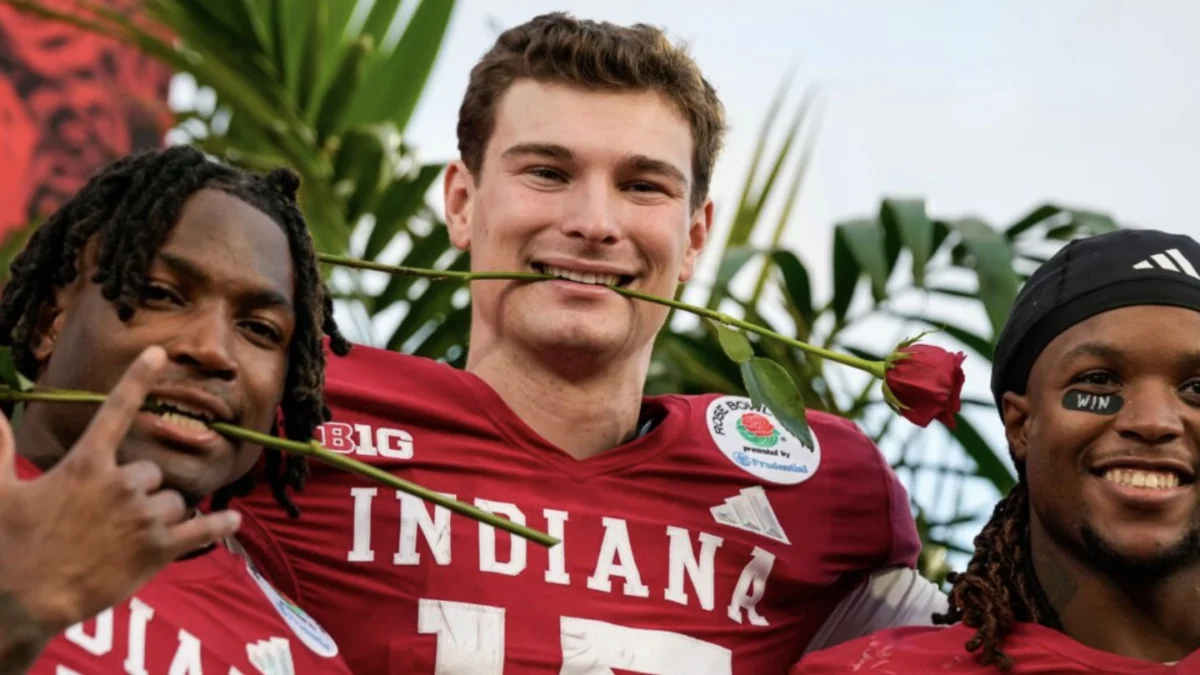
Take Indiana quarterback Fernando Mendoza. His rise up the draft boards isn’t about throwing the ball 70 yards from his knees. It’s about processing speed. Mendoza operates an offense that demands autonomy. When he checks out of a run into a quick slant because he sees safety rotation, he isn’t just playing college ball; he’s putting valid NFL tape on the resume.
Scouts used to obsess over hand size and 40 times. Now? They look at the transfer portal history to measure adaptability. Mendoza moving systems and thriving speaks louder than a combine drill. It shows he can learn a new language and command a locker room instantly—a prerequisite for any QB1 hoping to survive past October of their rookie year.
“We don’t recruit ‘projects’ anymore. We don’t have time. If a kid can’t handle a split-safety read or understand why he needs to spy the quarterback on 3rd-and-4, he won’t see the field. The NFL wants finished products, so that’s what we build.” — Anonymous SEC Defensive Coordinator
Moneyball Meets The Gridiron
Development used to be a vague buzzword. Now it’s math. Elite programs track everything. We aren’t just talking bench press numbers. We’re talking recovery rates, acceleration profiles, and workload management. This data creates a performance curve that NFL general managers crave.
When a team considers a defensive end, they value his “win rate” against double teams over his raw sack total. They look at a receiver’s separation efficiency against press coverage. This contextual data strips away the noise of lopsided scores. A three-touchdown game against an FCS school means nothing. A 60% completion rate against a Georgia defense running complex stunts means everything.
What This Means for Draft Night
As we barrel toward the postseason, watch the players who handle the chaos. The 2026 class is defined by mental fluidity. Hybrid defenders who can switch from rushing the passer to covering the slot will fly off the board. Quarterbacks who manage the game like 10-year vets will trump the guys with the cannon arms but slow eyes.
For the fans checking the odds on FanDuel or tracking props, pay attention to the “boring” traits: communication, pre-snap adjustments, and pocket discipline. That’s where the value lives. The NCAA isn’t just preparing these guys for the NFL; it’s becoming the NFL.


