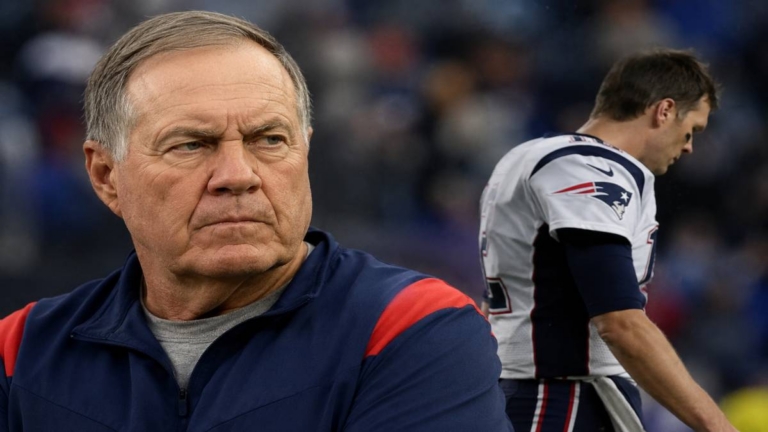


SANTA CLARA, Calif. — The shadow of Tom Brady doesn’t just loom over Foxborough; it is practically part of the architecture, built into the concrete of Gillette Stadium like a structural support beam. But when Drake Maye takes the field at Levi’s Stadium for Super Bowl 60, he isn’t just playing against the Seattle Seahawks. He is playing against the memory of the impossible 2001 run that started it all.
For two years, the “next Brady” label has been slapped on every spiral Maye throws. Now, the Drake Maye Super Bowl 60 narrative has hit a fever pitch. But here is the cold, hard truth that the nostalgia merchants ignore: Maye isn’t replicating Brady’s first title run. He is already outperforming it.
We romanticize 2001 because of the ending—Adam Vinatieri’s kick through the snow-globe confetti. But looking back at the box scores, Brady was a passenger for large chunks of that ride. In the 2001 playoffs, Brady completed just 60 passes for 572 yards and a single touchdown over three games. He averaged a pedestrian 5.9 yards per attempt. The Patriots’ defense, led by Ty Law and Willie McGinest, did the heavy lifting, holding opponents to just 40 points total.
Fast forward to 2026. Maye hasn’t had the luxury of being a passenger. The second-year signal-caller has put this offense on his back, accounting for 674 total yards (533 passing, 141 rushing) and five total touchdowns this postseason. His 5.9 yards per carry average isn’t just a bonus; it’s been the difference-maker against the Chargers, Texans, and Broncos.
The disparity becomes laughable when you line them up. Brady was managing the game; Maye is dictating it.
| Stat Category | Brady ’01 Playoffs (3 Games) | Maye ’26 Playoffs (3 Games) |
|---|---|---|
| Passing Yards | 572 | 533* |
| Total Touchdowns | 2 (1 Pass, 1 Rush) | 5 (4 Pass, 1 Rush) |
| Rushing Yards | 12 | 141 |
| Sacks Taken | 5 | 15 |
*Note: Maye has thrown for fewer yards but has faced significantly more pressure, taking 15 sacks compared to Brady’s 5, yet producing more points.
“We hear the noise. Everyone wants to talk about 24 years ago. But we’re not chasing ghosts in this locker room. We’re chasing a ring. Drake doesn’t need to be Tom. He just needs to be Drake, and that’s been enough to get us here.” — Jerod Mayo, Patriots Head Coach
The irony is rich. To cement his own legacy, Maye has to do what Brady did in Super Bowl 49: dismantle the Seahawks. This isn’t the Legion of Boom—Richard Sherman and Kam Chancellor are long gone—but Seattle’s No. 11 ranked pass defense is opportunistic. They thrive on chaos, much like the 2001 Rams thrived on speed.
Brady’s MVP award in Super Bowl 36 was largely narrative-driven; he led the final drive, but the defense won the game. If Maye wants to separate himself, he can’t just rely on a last-second field goal. He needs a signature performance. A multi-touchdown game with zero turnovers wouldn’t just win the Lombardi; it would finally allow New England to turn the page.
A win on Sunday does more than add a seventh banner to Gillette Stadium. It validates the new era. If Maye hoists that trophy, the conversation shifts from “Is he the next Brady?” to “He is the first Maye.” The Patriots have their franchise cornerstone. Now, they just need the jewelry to prove it.