

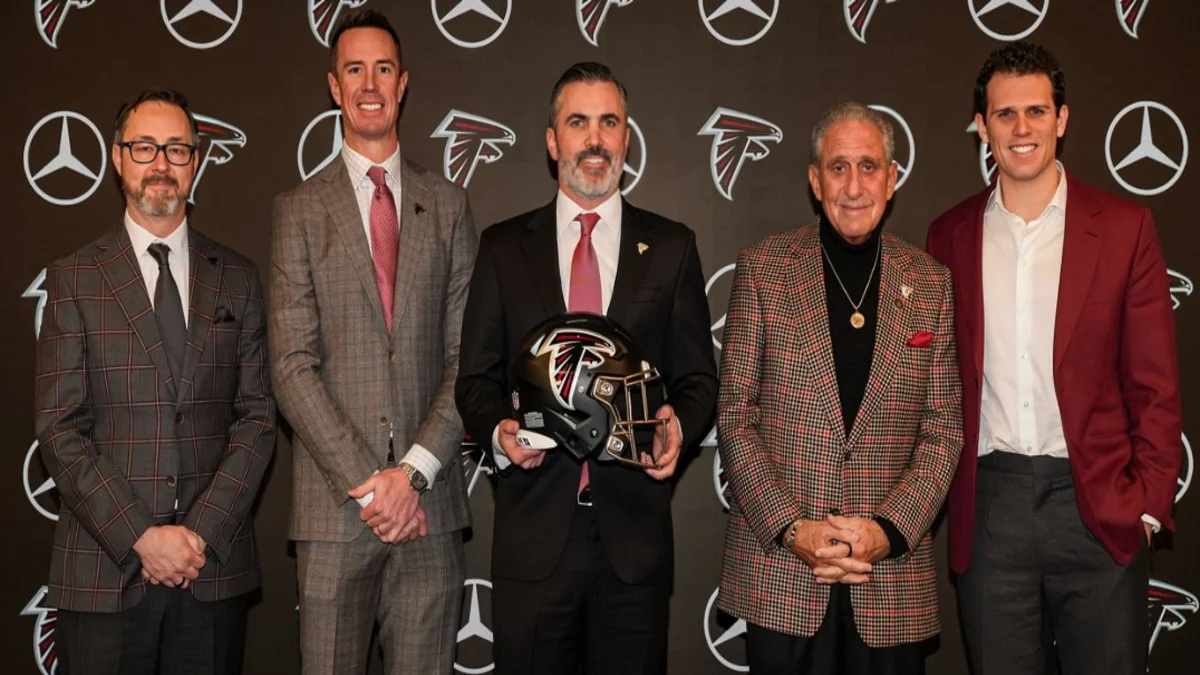
ATLANTA — Two years ago today, the Atlanta Falcons social media team posted a photo that was supposed to signal the end of mediocrity. “Here to do the hard work,” the caption read, featuring a smiling Raheem Morris flanked by Arthur Blank and Terry Fontenot. Today, that photo serves as a cold reminder of how quickly “hard work” vanishes without results. With Kevin Stefanski now officially in the building as the 20th head coach in franchise history, the Morris era is officially a closed chapter of 8-9 records and missed opportunities.
The vision in 2024 seemed clear. Morris was the “magnetism” hire, the leader who would bridge the gap between a young, talented roster and postseason success. Instead, the Falcons found themselves stuck in neutral. Despite a defense that surged under his guidance, the offensive output remained maddeningly inconsistent. Atlanta finished the 2025 season with a losing record for the second straight year under Morris, failing to capitalize on a weak NFC South that was practically gift-wrapped for them. While teams like the Seahawks and Patriots—who hired the coaches Atlanta passed on—prepare for Super Bowl LX, the Falcons are back to square one.
“We talked about a culture of winning, but talking doesn’t move the chains. We had the pieces. We had the talent. We just didn’t have the finish. It’s a performance league, and we didn’t perform when the lights were brightest.” — Anonymous Falcons Veteran, January 2026
Arthur Blank isn’t getting any younger, and his patience finally snapped after the Week 18 loss to the Saints. By hiring Kevin Stefanski on January 17, Blank signaled a shift from “vibes and culture” to “system and precision.” Stefanski brings a proven track record of maximizing quarterback play—a desperate need for a team that has cycled through options since the Matt Ryan era ended. The immediate focus shifts to the 2026 NFL Draft and free agency, where the Falcons must finally solve the pass-rush void that has haunted them for a decade. Expect a heavy emphasis on analytics-driven roster building, a sharp departure from the gut-feeling approach that defined the last twenty-four months.