

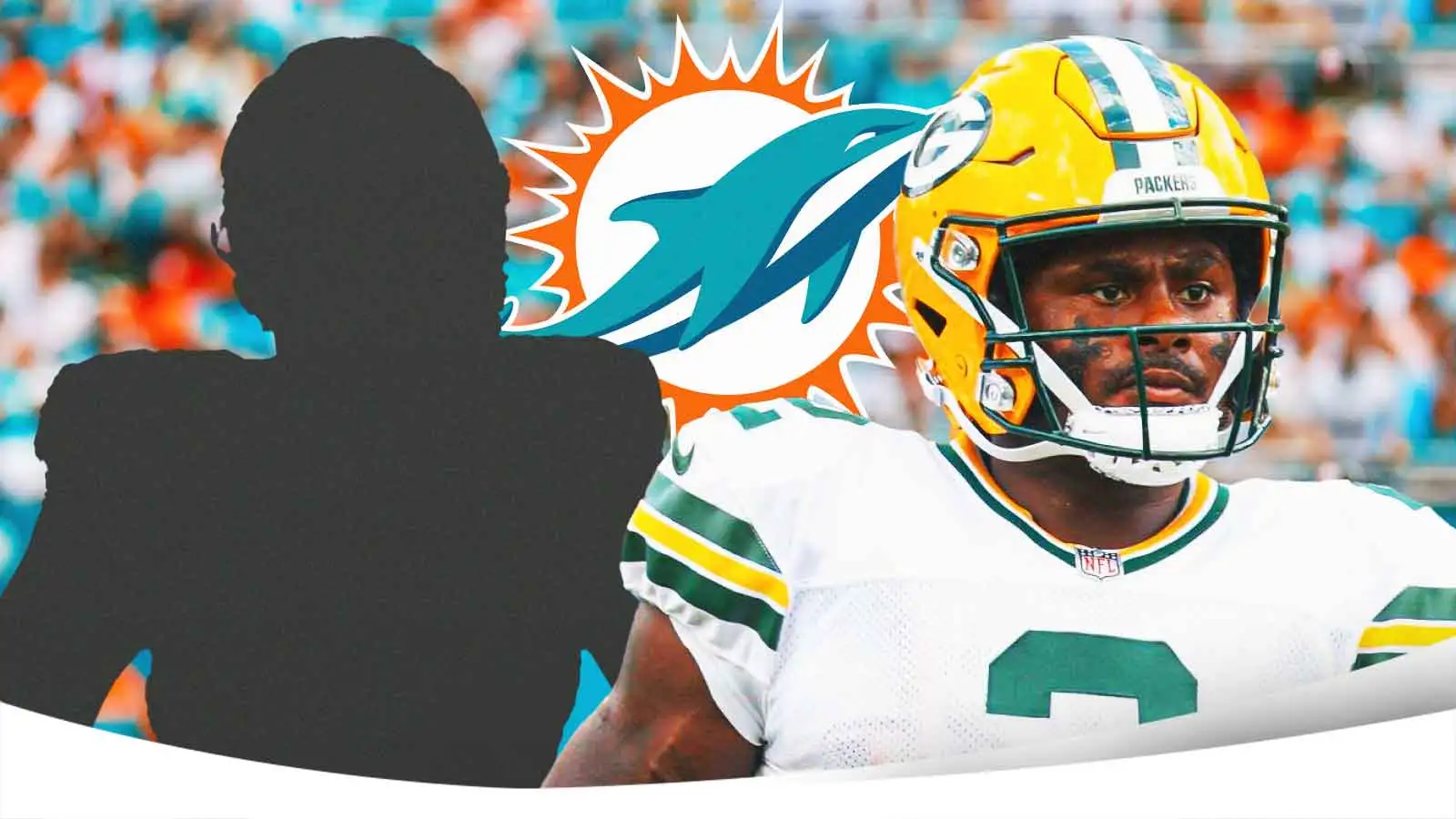
MIAMI GARDENS, FL — The “Great Reset” of the Miami Dolphins officially has a face, and it carries a $22.5 million annual price tag. By signing former Packers backup Malik Willis to a three-year, $67.5 million deal with $45 million guaranteed, General Manager Jon-Eric Sullivan hasn’t just replaced Tua Tagovailoa—he’s bet the franchise’s future on raw, unrefined velocity.
The arrival of Willis marks a hard pivot from the glitzy optimism of the Chris Grier era to the gritty pragmatism Sullivan brought from Green Bay. For a fanbase that watched the 2025 campaign end in a 7-10 whimper, this move is a lightning rod. Willis is the ultimate project: a dual-threat signal-caller with a cannon for an arm but a career completion percentage that still keeps scouts up at night. He is the spark, but if Miami doesn’t build a fireplace, the whole house is going to burn down.
The logic behind the move is clear. Sullivan and new head coach Jeff Hafley spent the last two seasons with Willis in Wisconsin. They’ve seen the “untapped potential” up close. They know the risk. But as the 2026 league year opens, the Dolphins are still a jigsaw puzzle with the most critical piece missing from the middle.
Last season, the Dolphins’ offense became a stagnant shell. Injuries didn’t just hamper the offensive line; they exposed a roster built for a track meet that was forced into a mud fight. While Jordyn Brooks earned First-Team All-Pro honors on defense, the offense lacked the muscle to let De’Von Achane find daylight. If Willis is going to survive the AFC East pass rush, Miami cannot rely on potential alone in the trenches.
The focus must now shift to the interior. Jonah Savaiinaea, the 2025 second-round pick, showed flashes of dominance but often looked like a man on an island. He needs an anchor. Miami has been disciplined so far, snagging value vets like Joshua Uche and Tutu Atwell, but the “big splash” that actually matters is a stabilizing, veteran offensive guard. Without a fortified pocket, Willis’s internal clock—which has historically run slow—will become a liability rather than an asset.
“We are going to build a football team that is resilient, physical, and tough. Our team-building process will be intentional, disciplined, and sound. We will compete no matter the circumstances.”
— Jon-Eric Sullivan, Dolphins General Manager
The Dolphins are operating under massive salary cap constraints, evidenced by the $99 million dead cap hit taken to move on from Tagovailoa. This isn’t a team with the luxury of making mistakes. Signing Willis is a high-ceiling play that requires a high-floor environment. If Sullivan doesn’t secure a premier guard in the coming weeks, the Willis experiment won’t just be a gamble—it’ll be another “what if” in a history already crowded with them.
Miami has the draft capital and the creative cap space to finish the job. The Willis signing was the preamble. Now, they need to build the wall.